

Hello, my name is Blake Kettler, and I’m an intern at Richard I. Bong Veterans Historical Center. I’m an anthropology major and history minor with a museum studies certificate at the University of Minnesota Duluth. Recently, I helped create a new exhibit about Charles H. Stoddard Jr., a remarkable man whose life bridged military service, scientific discovery, environmental advocacy, and public leadership.
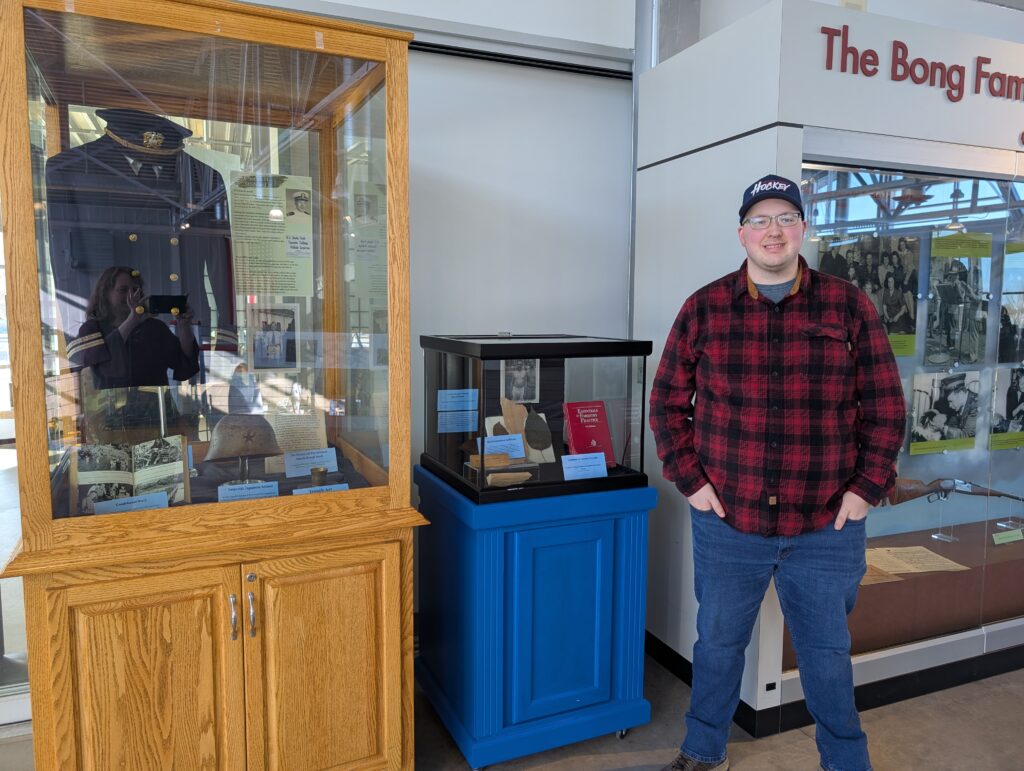
Charles H. Stoddard Jr. Project
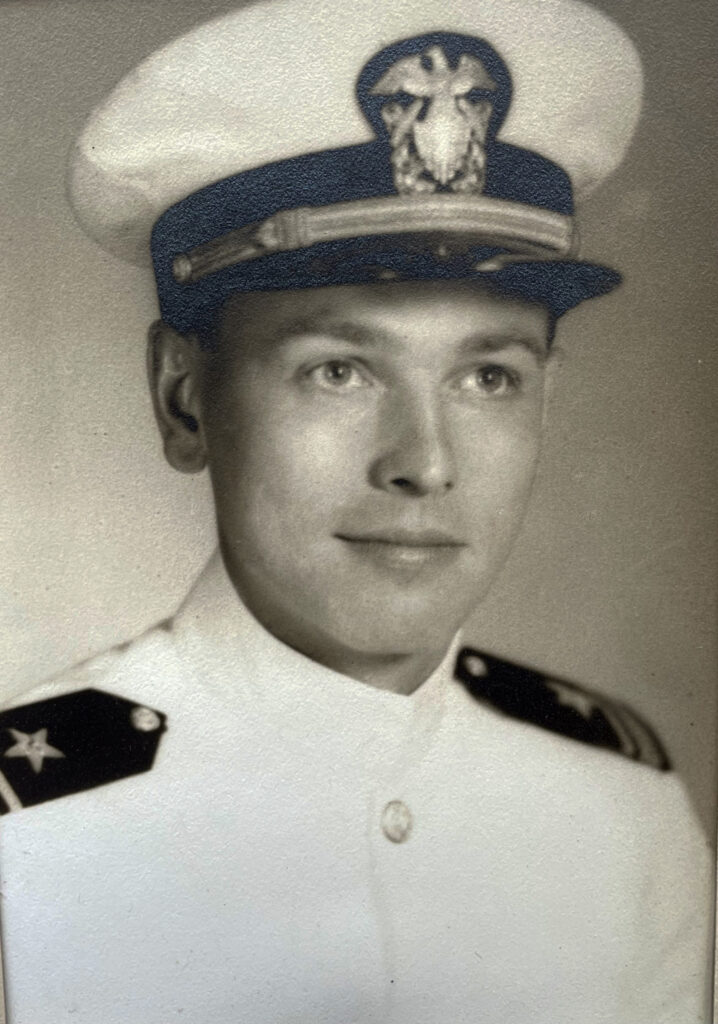
Charles served as a communications officer for the U.S. Navy in the Pacific Theater during World War II. His work placed him at the heart of wartime intelligence, helping decode Japanese communications while ensuring American messages remained secure. He served at one of the most famous battles of the Pacific theater, Guadalcanal. He was even pictured in a very famous first account of the battle Guadalcanal Diary. During his time stationed on the Russell Islands, he pursued his true passion: forestry. “The man loved trees,” his son told us. While there, Charles identified a new tree species that now bears his name , Mastixiodendron stoddardii.
After the war, Charles built an accomplished career in forestry. He authored several books, including one that was used for years after his death.. His expertise and writing eventually brought him into the political sphere, where he contributed speeches to the presidential campaign of John F. Kennedy.
Charles also played a central role in one of the earliest major pollution scandals in the United States. He had a part in revealing that the Reserve Mining Company in Silver Bay, Minnesota, was dumping 67,000 tons of taconite tailings into Lake Superior every day. His actions brought national attention to the issue and ultimately resulted in the company being fined $1 million.
Charles H. Stoddard Jr. passed away on December 25, 1997, leaving behind a legacy defined by service, curiosity, integrity, and a deep love for the natural world.
History is more than famous names like MacArthur or John Basilone. A bottom-up perspective, focusing on ordinary people and lesser-known contributors, reveals how history happened. Charles Stoddard Jr. is a great example. And that’s what is interesting to me, learning about the stories of the people who lived during it. I had never heard of him before my research, yet he served in World War II during one of the Pacific theater’s most important battles. He helped decode Japanese codes, appears in a well-known book about that battle, and after the war he wrote for JFK and held a mining company’s feet to the fire of public opinion. His story shows that history is made not only by headline figures but also by the people who did the unglamorous, essential work.
This project taught me how museums reach audiences and how exhibits are created. I learned how to mock up an exhibit, perform intensive parallel research, and design an exhibit from concept to presentation. Those skills gave me a practical look at museum work and what it takes to be a museum professional, which is exactly what this internship was meant to provide. I wouldn’t mind working in the museum world, so I found these learned experiences to be essential, especially once I’m done with school and this internship.
Posted 3/2/2026