


The most shot-at girl in the Pacific.
A Wisconsin farm boy, the woman he named his airplane for, eighty years in the jungle, and the museum that went to find her. Scroll.
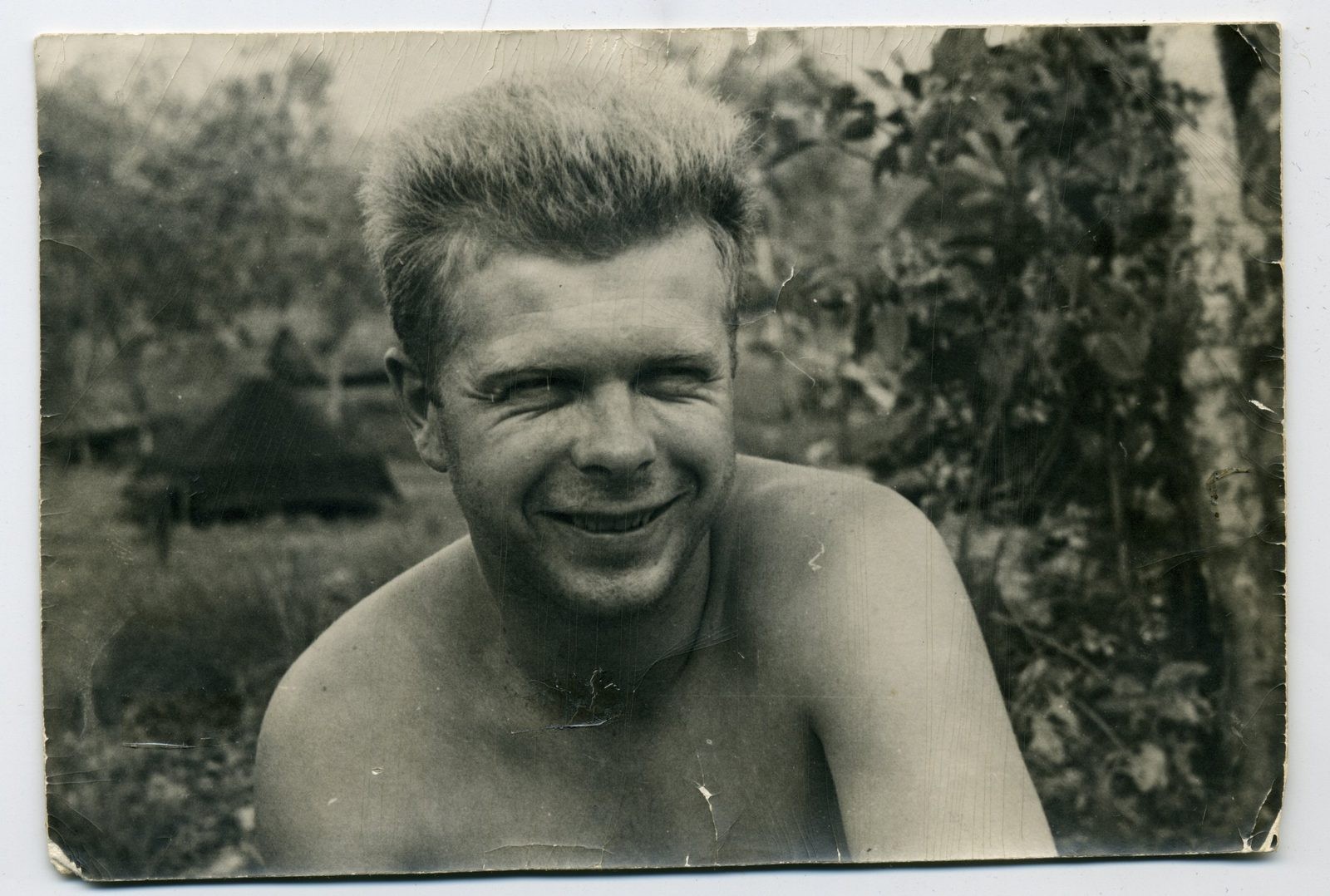
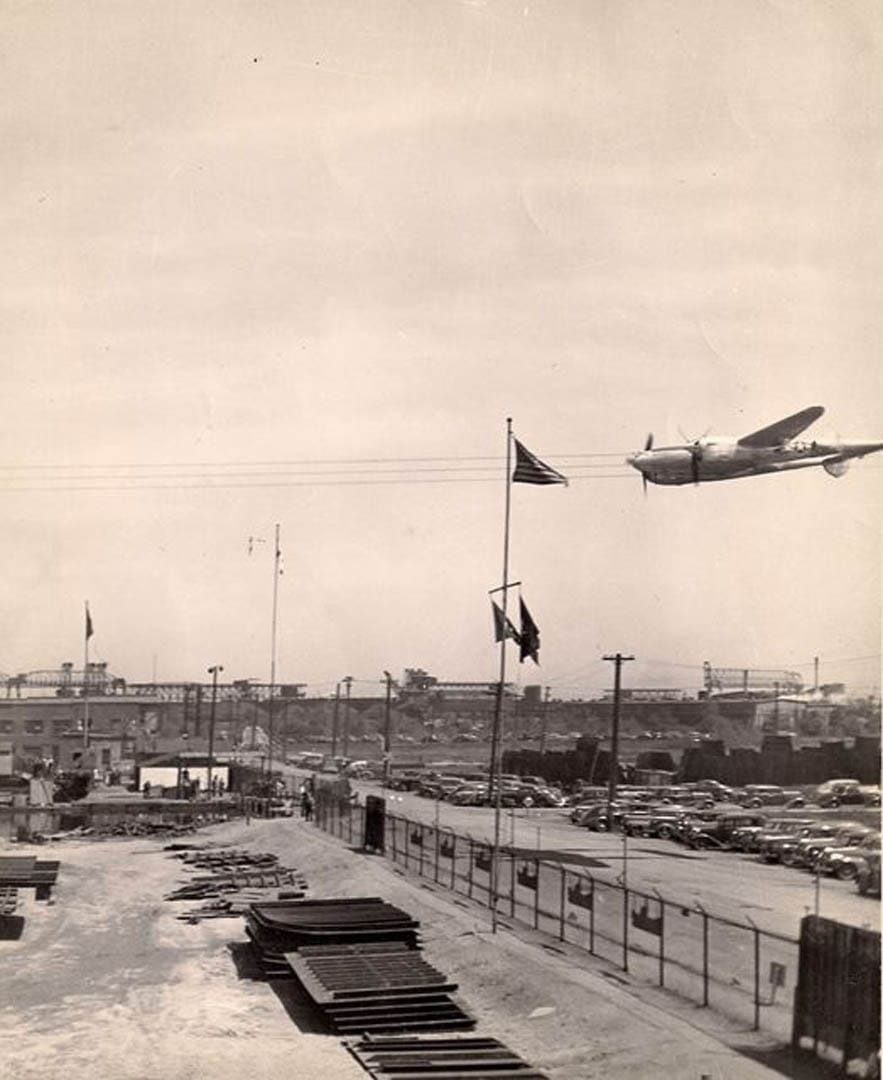
A farm boy who watched the mail planes.
Richard Ira Bong was born in Superior in 1920, the first of nine children of a Swedish immigrant father, and raised on a farm in Poplar, fifteen miles east. He drove farm machinery young, hunted and fished the woods and streams, played on the school teams, sang in the church choir, and planted a windbreak of evergreens for his 4-H project.
He learned to fly in Superior.
The airplanes that hooked him were said to be carrying mail for President Coolidge’s summer White House in Superior. As a student at the State Teachers College, now UW-Superior, he learned to fly in the Civilian Pilot Training program. At twenty he was a flying cadet in the Army Air Corps, just in time for the war.



Two hundred missions in a P-38 Lightning.
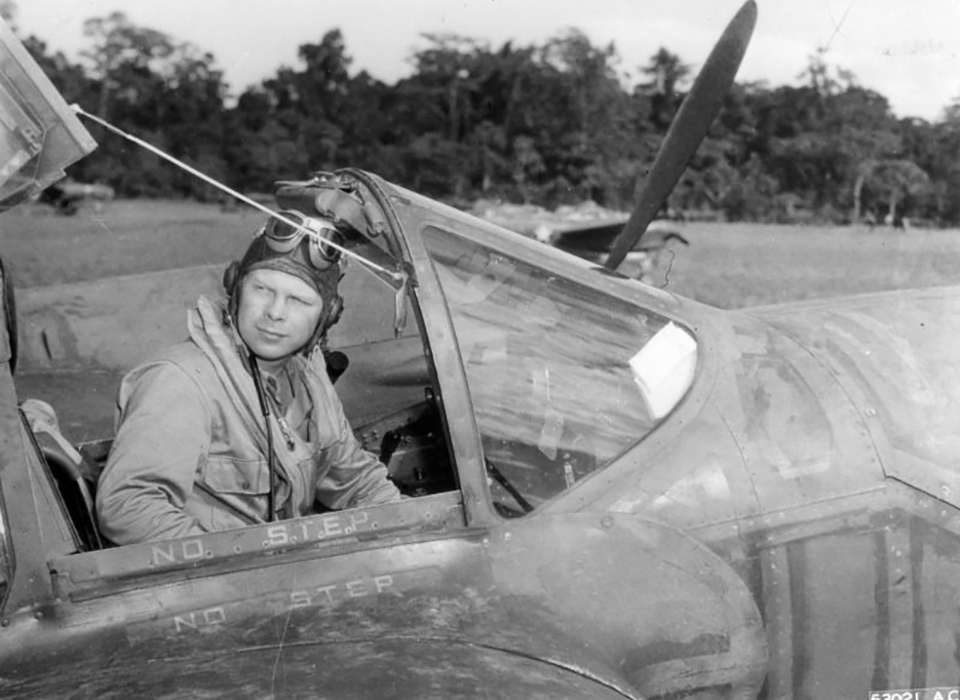
Bong flew the twin-boomed Lockheed P-38 across the Southwest Pacific, more than 200 combat missions over New Guinea and the Philippines.
“The most shot-at girl in the Pacific.”Dick Bong, to Marge, on the airplane he named for her
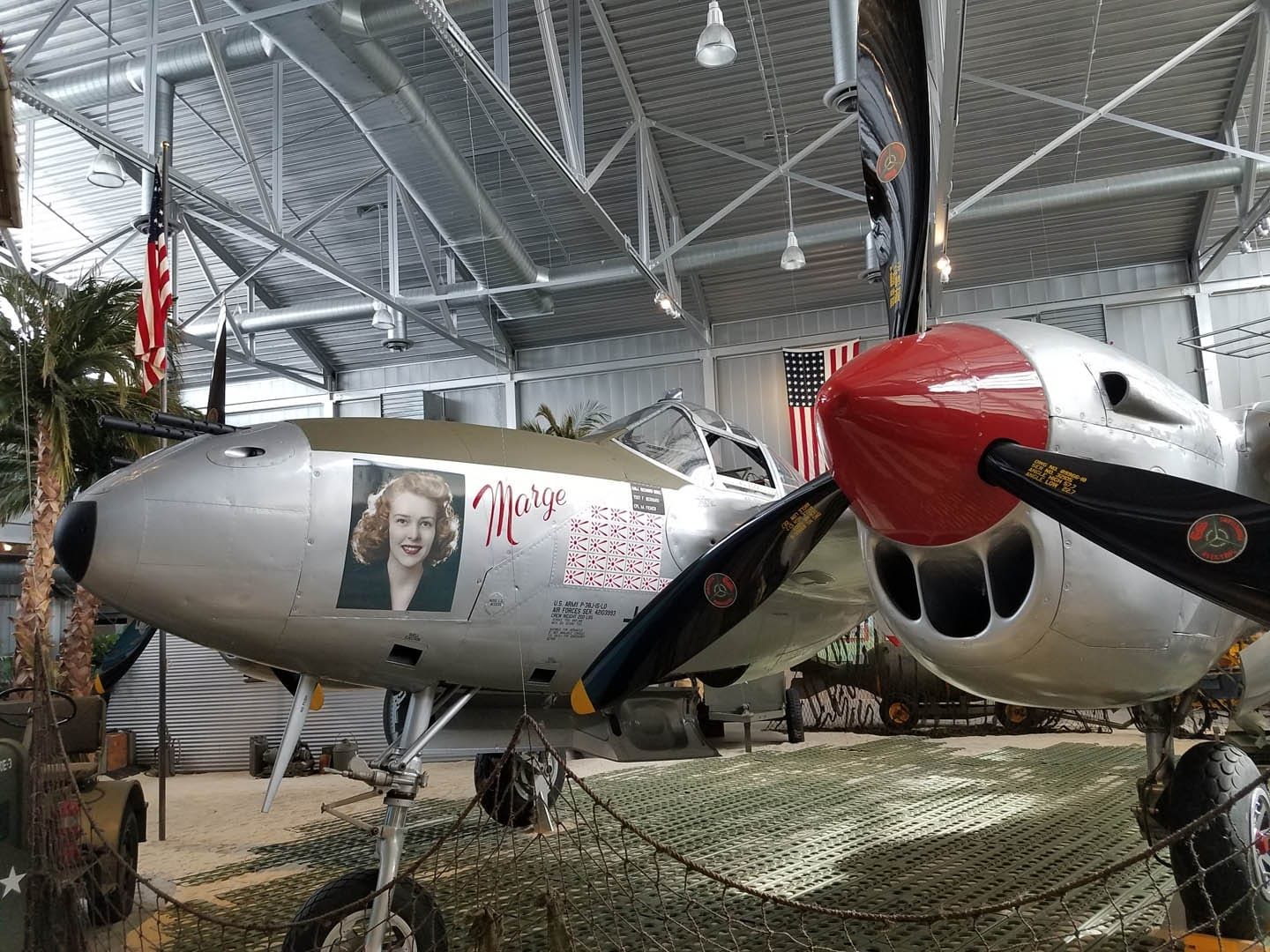
He named the Lightning for Marge Vattendahl, his sweetheart back in Superior, and fixed her photograph to the nose. It became the most famous nose art of the Pacific war.
Bong received the Medal of Honor and every other decoration but the Purple Heart. In late 1944 he was ordered home for his own safety, as America’s Ace of Aces.

An engine fails. Marge goes into the jungle.
With Bong stateside, another pilot was flying Marge when an engine malfunctioned. He bailed out and survived. The airplane fell into the mountains of Papua New Guinea, roughly 8,000 miles from the farm in Poplar.
For eighty years, nobody knew exactly where.
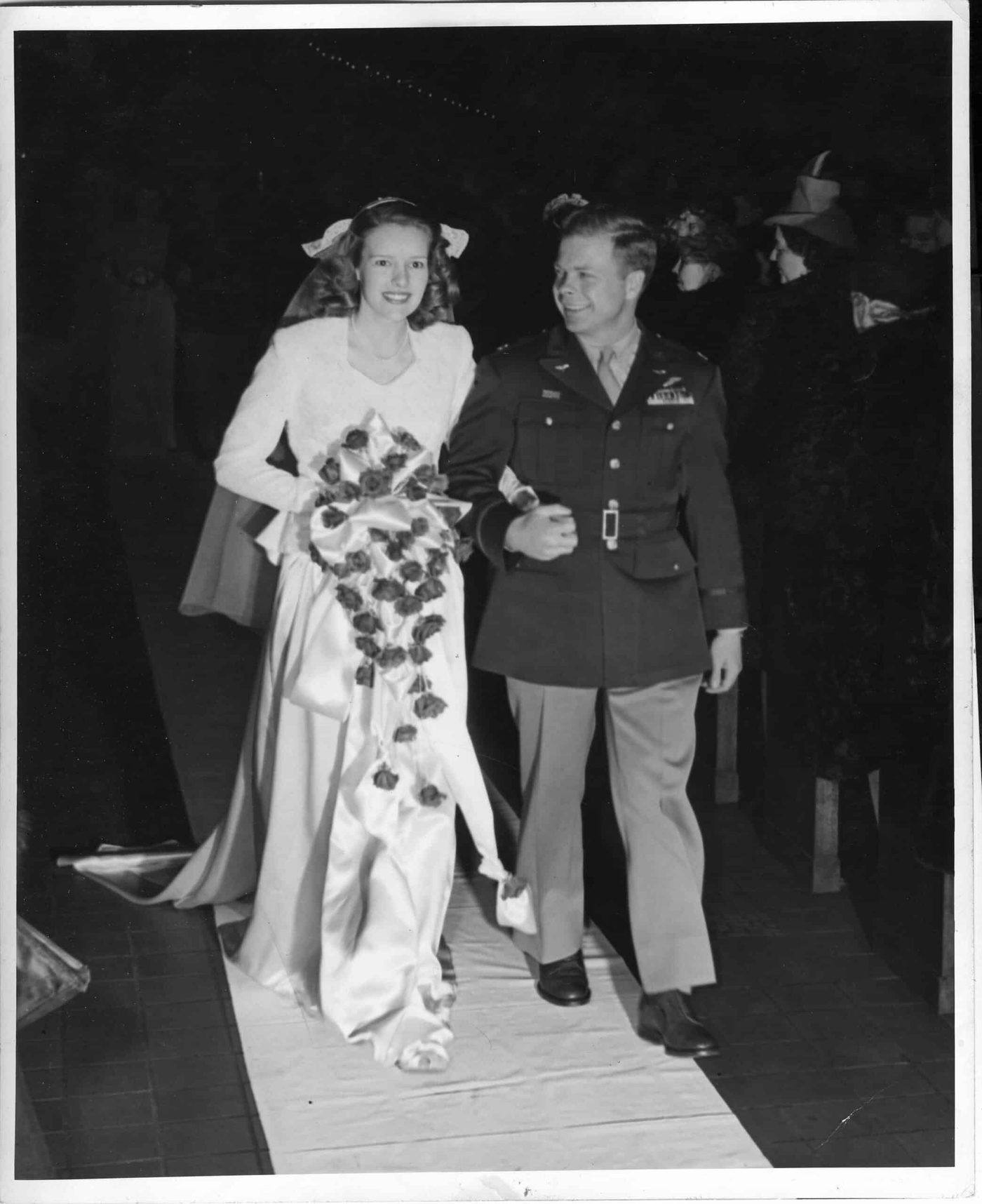
Home. Married in a Superior cathedral.
Back in Wisconsin as the country’s most celebrated pilot, Dick married Marge at a cathedral in Superior. The city turned out for them.
August 6, 1945.
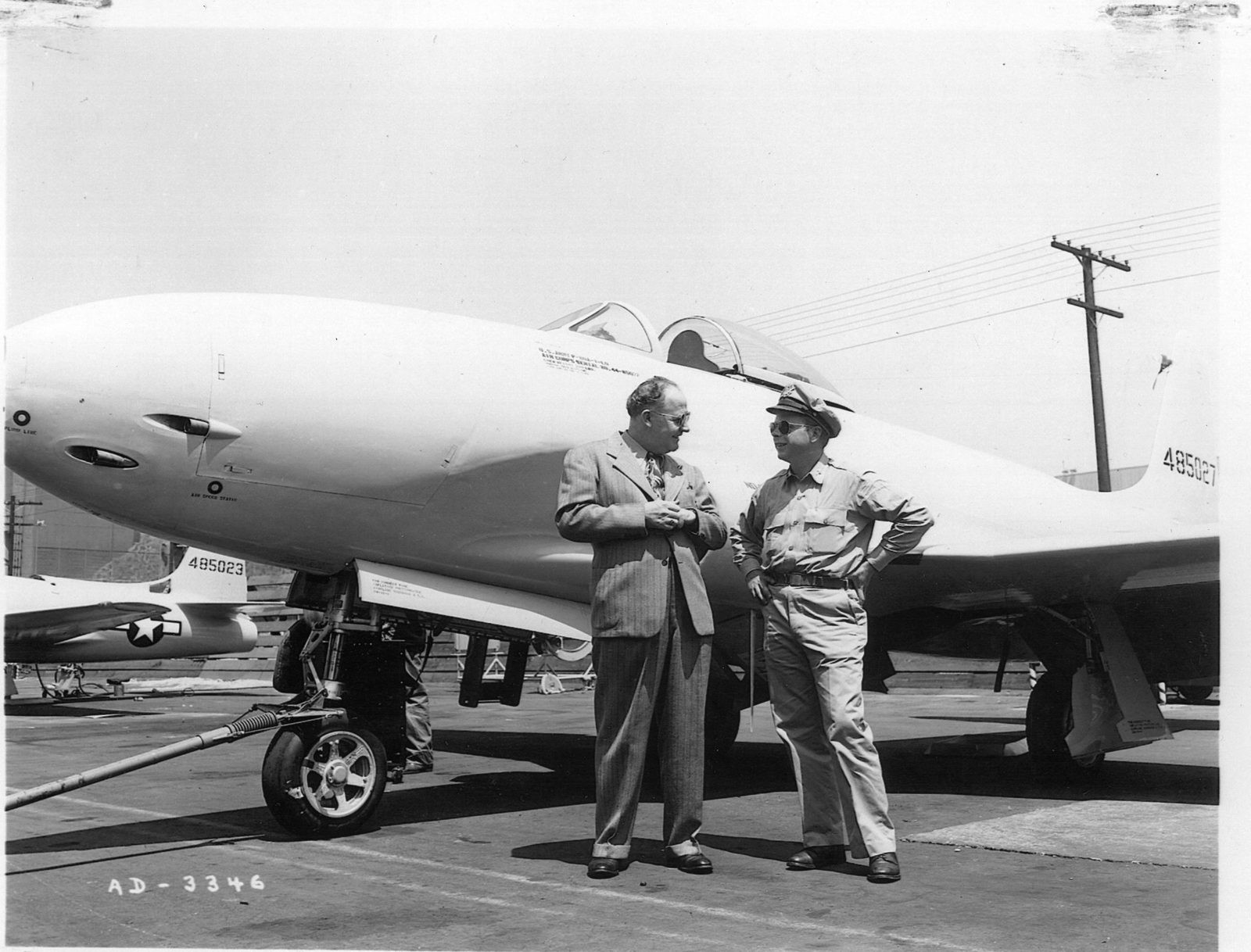
Six months later, test-flying the first Lockheed jet fighter in California, Bong was killed. It was said he bailed out too late after steering the aircraft away from homes. He was 24. It was the day the atomic bomb fell on Hiroshima, and he still made banner headlines across the country.
Thousands attended the funeral in Superior. Many more lined the route to the Poplar cemetery, where he was buried in the family plot.
A memorial in Poplar.
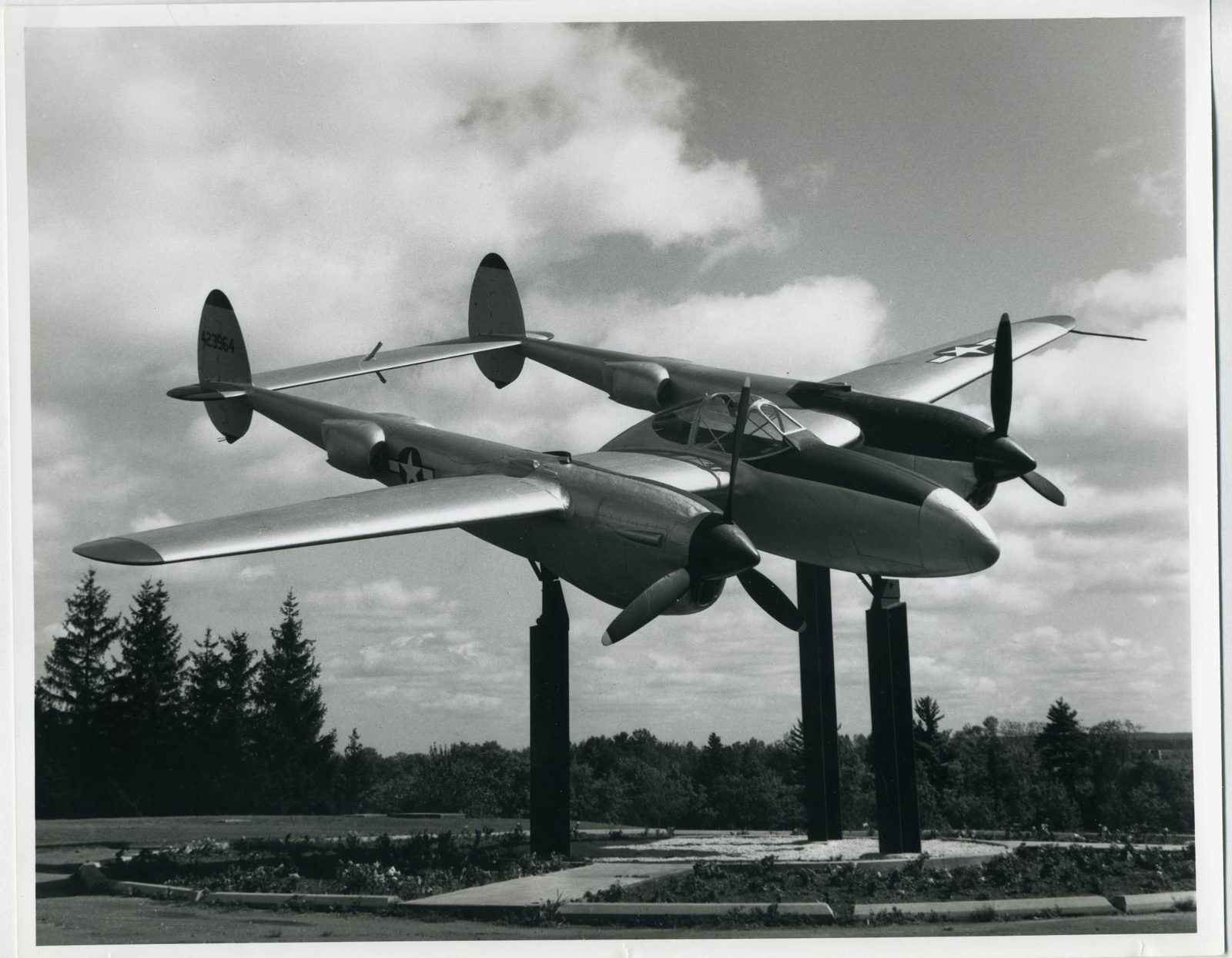
Ten years after his death, in 1955, his hometown dedicated a memorial to Dick Bong, with a P-38 Lightning acquired from the Air Force standing on a pylon beside the highway. It stood there for more than fifty years.
Then a home, on the bay.
Funds raised by the Bong family and by Marge Bong Drucker built the Richard I. Bong Veterans Historical Center, which opened in Superior in 2002. The P-38 came inside. The mission grew to every veteran, from the Second World War to the conflicts of today. More than a museum, a home.
Eighty years on, an expedition.
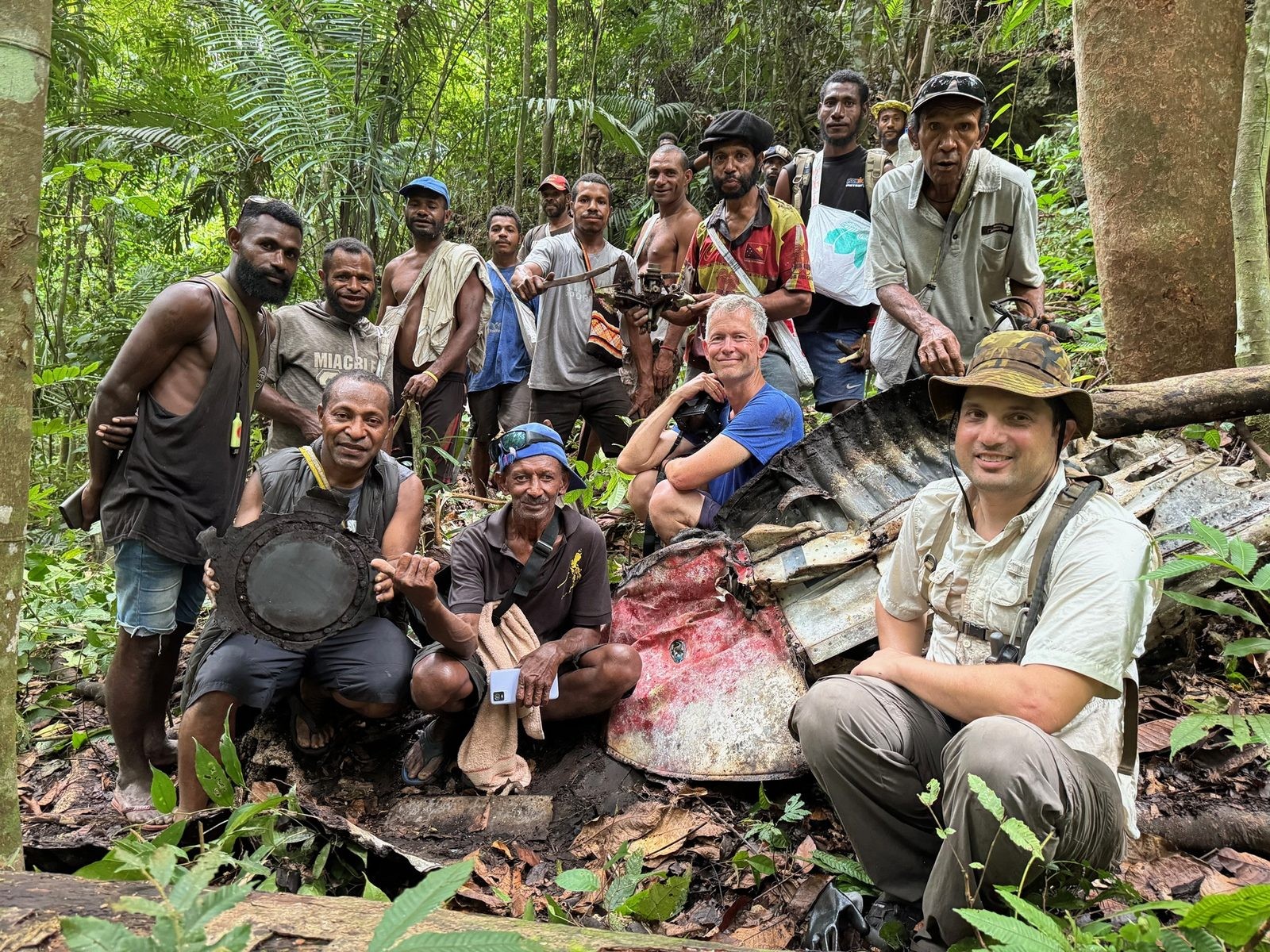
In March 2024, on the 80th anniversary of the crash, the museum and Pacific Wrecks announced they would go and find her.
Two months later the team reached the crash site and confirmed the identity of the wreck. In June, the museum threw a public celebration in Superior. Marge was found.

A sister museum across the Pacific.
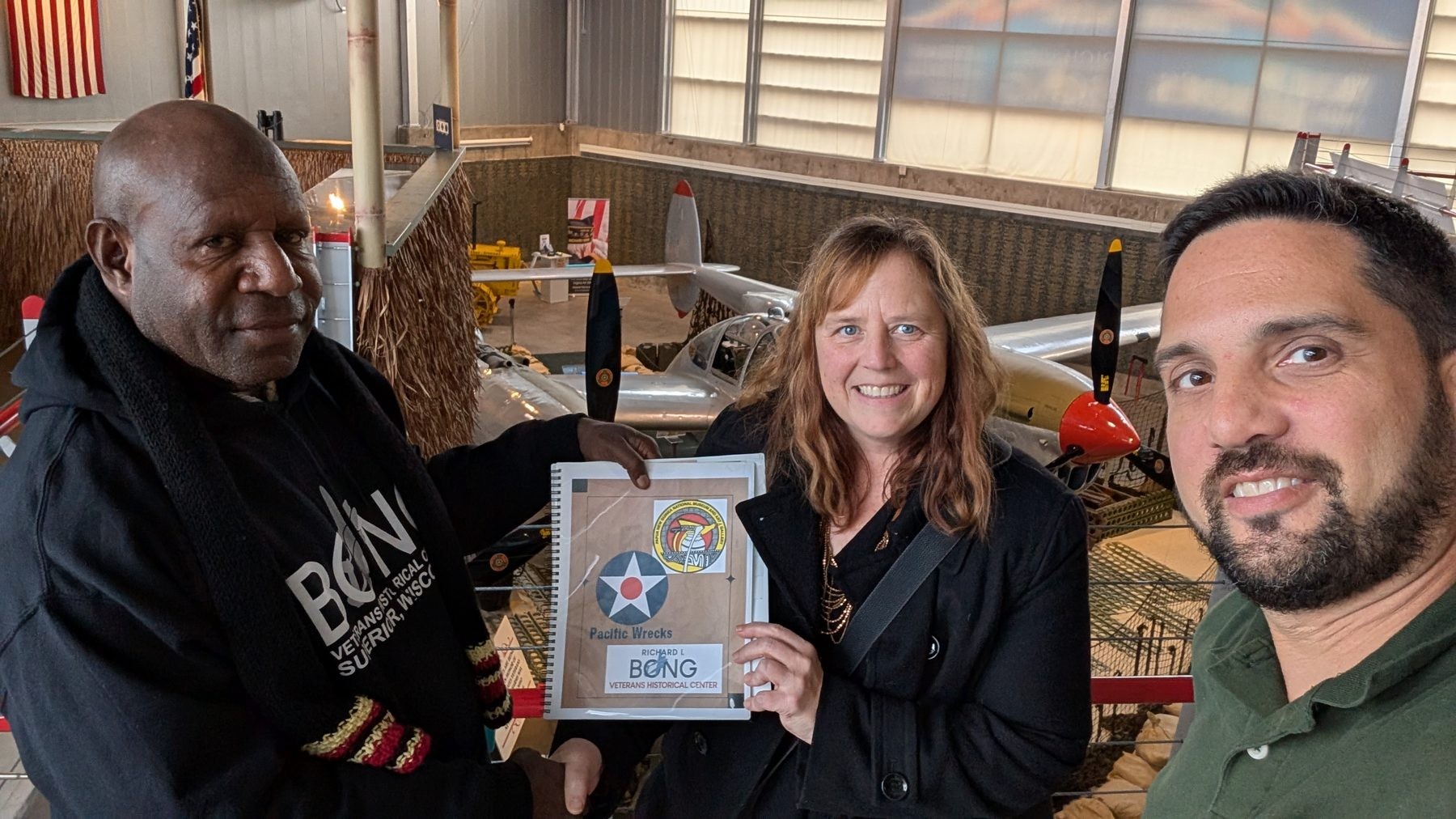
In November 2024 the directors of Papua New Guinea’s National Museum and Art Gallery came to Superior and the two museums became sisters, with Smithsonian curators and Sister Cities International at the table. Visits in 2025 secured permissions and friendships.
The mission is also fresh water.
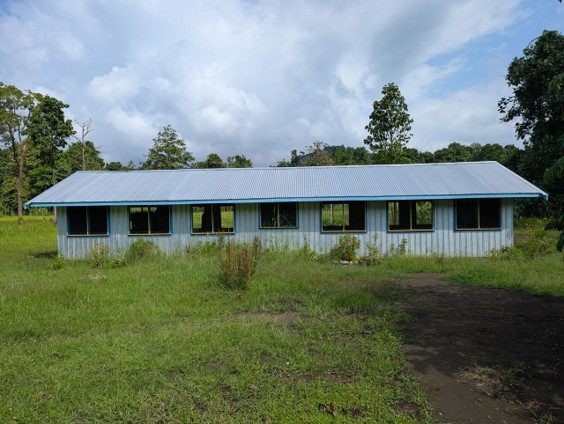
Mission: Marge funds humanitarian work in the village nearest the crash site: fresh water for the community and books for the school. The people who kept the airplane’s secret for eighty years are part of the story now.
Books in the village school.
Every gift to the mission is split between the exhibit in Superior and the village in Papua New Guinea.

The documentary premieres.
March 2026, Duluth. Summer 2026 expeditions followed, with Major Bong’s nephews on the team.
Now: the exhibit.
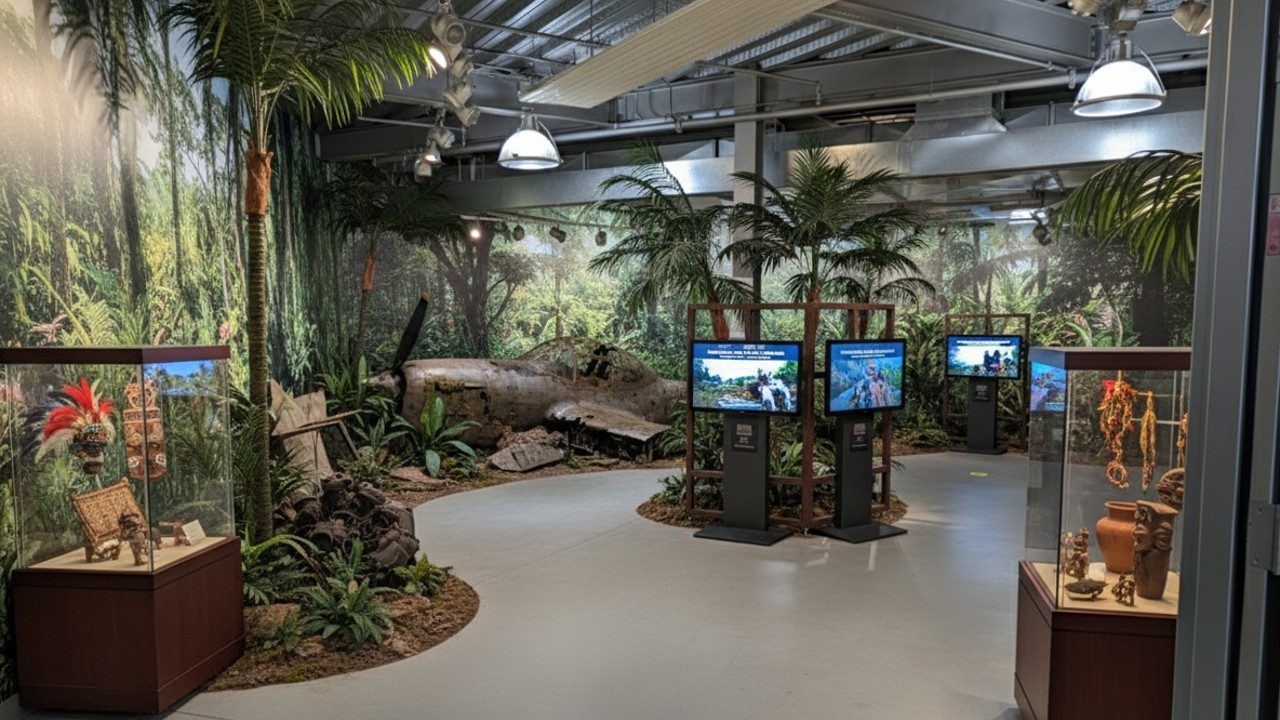
Phase 4 builds a permanent Mission: Marge exhibit in the museum’s changing gallery: a jungle experience, exhibit audio, a children’s movie, and a fabricated case for what came home. Corporate naming rights are available.
Help build it
$185,000 raised. The exhibit is next.
As of June 2, 2026. Gifts fund the exhibit build in Superior and fresh water and books for the village nearest the crash site.
Every dollar moves the tracker. Gifts are tax-deductible to the extent allowed by law.
Donate to Mission: MargeShirts, patches, and prints. Proceeds go straight to the expedition and the exhibit.
Shop the collectionCorporate naming rights for the permanent Mission: Marge exhibit are available. Talk to our Executive Director.
(715) 392-7151



